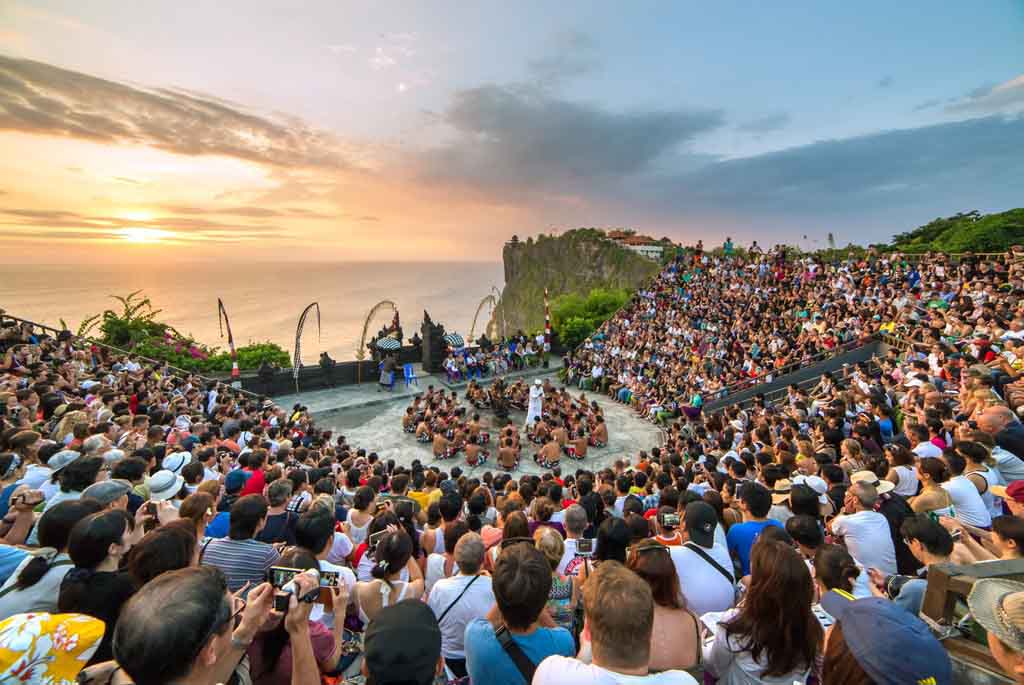
The Kecak Dance is one of Bali’s most iconic cultural performances, often referred to as the Ramayana Monkey Chant. Unlike other traditional Balinese dances, the Kecak does not use gamelan instruments. Instead, it relies on the powerful chanting of dozens of male performers who rhythmically shout “cak cak cak” while moving in unison. This creates a dramatic atmosphere that captivates audiences worldwide.
Origins of the Kecak Dance
The Kecak Dance was developed in the 1930s by Balinese artist Wayan Limbak in collaboration with German painter and musician Walter Spies. Inspired by the sacred Sanghyang ritual, where dancers enter a trance to communicate with ancestral spirits, they transformed the ritual into a theatrical performance based on the Hindu epic Ramayana.
In the performance, the chorus surrounds the main dancers who portray characters such as Rama, Sita, Hanuman, Sugriva, and Ravana. Through expressive gestures, storytelling, and chanting, the dance depicts Rama’s quest to rescue Sita from the demon king Ravana.
Unique Features
- No musical instruments: The dance relies solely on human voices and synchronized movements.
- Mass performance: Dozens of men form a circle, chanting and creating rhythm.
- Spiritual roots: Derived from the Sanghyang ritual, symbolizing communication with divine energy.
- Tourist attraction: Today, Kecak is performed daily across Bali, with the most famous show at Uluwatu Temple, staged at sunset against a dramatic ocean backdrop.
Variations of Kecak Dance
Beyond the Ramayana story, several versions have been created:
- Kecak Subali and Sugriva (1976) – depicting the conflict between two monkey brothers.
- Kecak Dewa Ruci (1982) – inspired by Javanese wayang stories, created by I Wayan Dibia.
Admission Fee Information for Uluwatu Kecak Dance (2025):
- Kecak Dance Ticket (Adult): Rp 139,000
- Child Ticket (under 12 years): Rp 67,000
- Infant: Free
- Uluwatu Temple Entrance Ticket: Not included in the dance ticket. Must be purchased separately at the temple gate.
The Uluwatu Kecak Dance is one of Bali’s most popular cultural attractions, staged daily at sunset on the cliffside amphitheater of Uluwatu Temple. Tickets can be purchased online or at the venue, but advance booking is highly recommended as shows often sell out. Performances usually begin at 18:00 or 19:00 WITA, timed perfectly with the sunset over the Indian Ocean.
Key Notes for Visitors
- Separate Tickets: You need one ticket for the temple and another for the Kecak Dance show. Combined tickets are available online to skip queues.
- Best Time to Arrive: At least 1 hour before the show to secure good seating and enjoy the temple grounds.
- Payment: Cash in Indonesian Rupiah (IDR) is accepted at the gate; online bookings allow card payments.
- Dress Code: Modest clothing is required for temple entry; sarongs and sashes are provided at the entrance.
Why You Should See the Uluwatu Kecak Dance
Watching the Kecak Dance at Uluwatu Temple is a must‑do experience in Bali. The performance takes place on a cliffside stage overlooking the Indian Ocean, timed perfectly with the sunset. The combination of chanting, fire, and dramatic storytelling makes it one of the most unforgettable cultural attractions in Bali.